
Shingle wear
Brittle, curled, displaced, or weathered shingles can leave vulnerable sections.
 Template Preview

Find the issue. Understand the options. Protect your home without unnecessary guesswork.
A little water can travel a long way. A good repair begins by investigating the actual entry point and the surrounding roofing system rather than covering the most visible symptom.
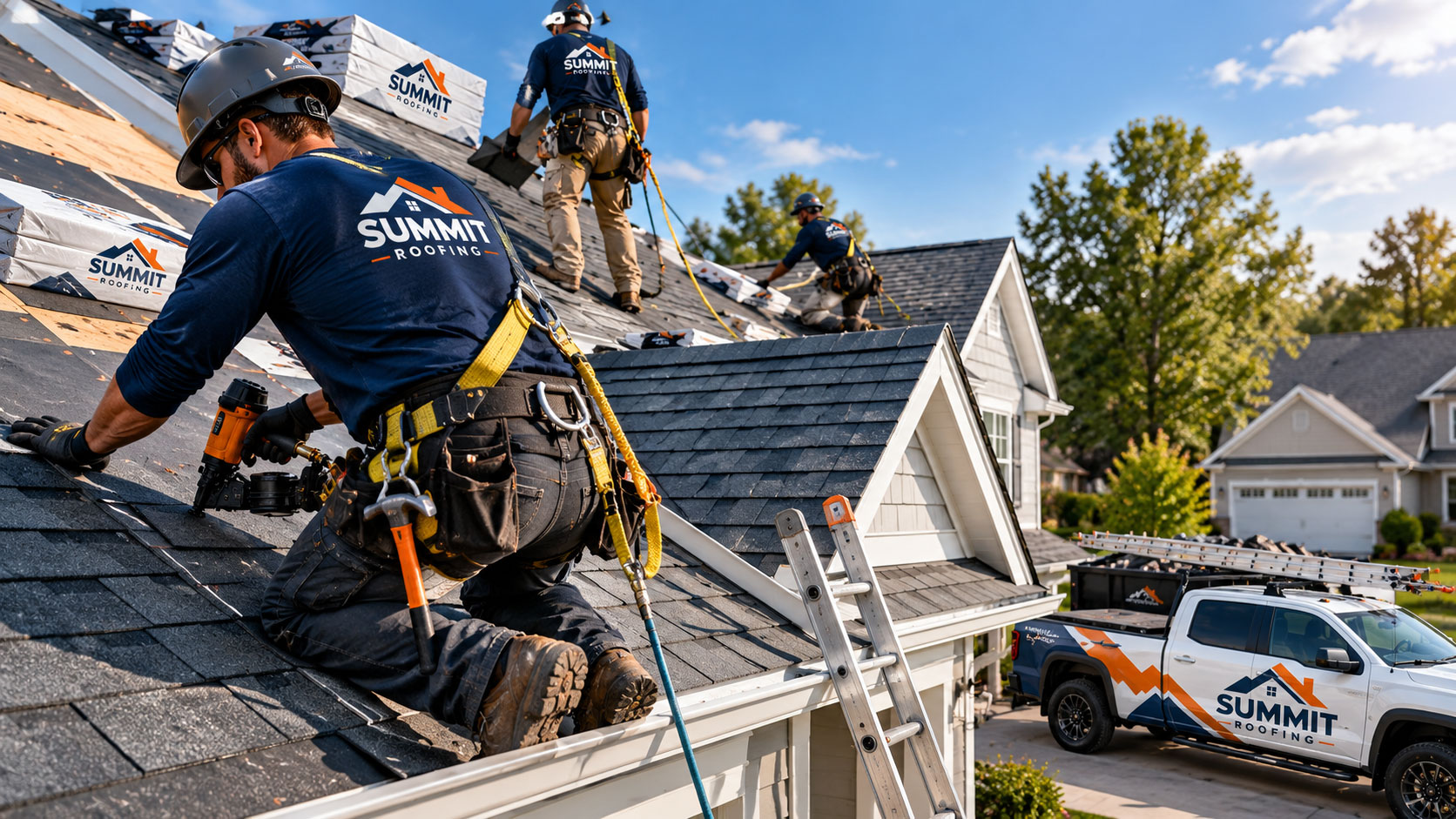
Roof systems work as layers. These are some of the areas a careful assessment may consider.
Brittle, curled, displaced, or weathered shingles can leave vulnerable sections.
Connections around roof penetrations and changes in plane need a watertight finish.
Ceiling spots, damp sheathing, and recurring drips may point to a larger path of water entry.
The first conversation is about the pattern of the problem: when it appears, what has changed, and what the roof has experienced. That context can help prioritize an appropriate inspection.
Note when the leak or damage first appeared.
Consider covering, penetrations, transitions, and drainage.
Understand intended work, materials, and potential limitations.
Know which signs to watch for moving forward.
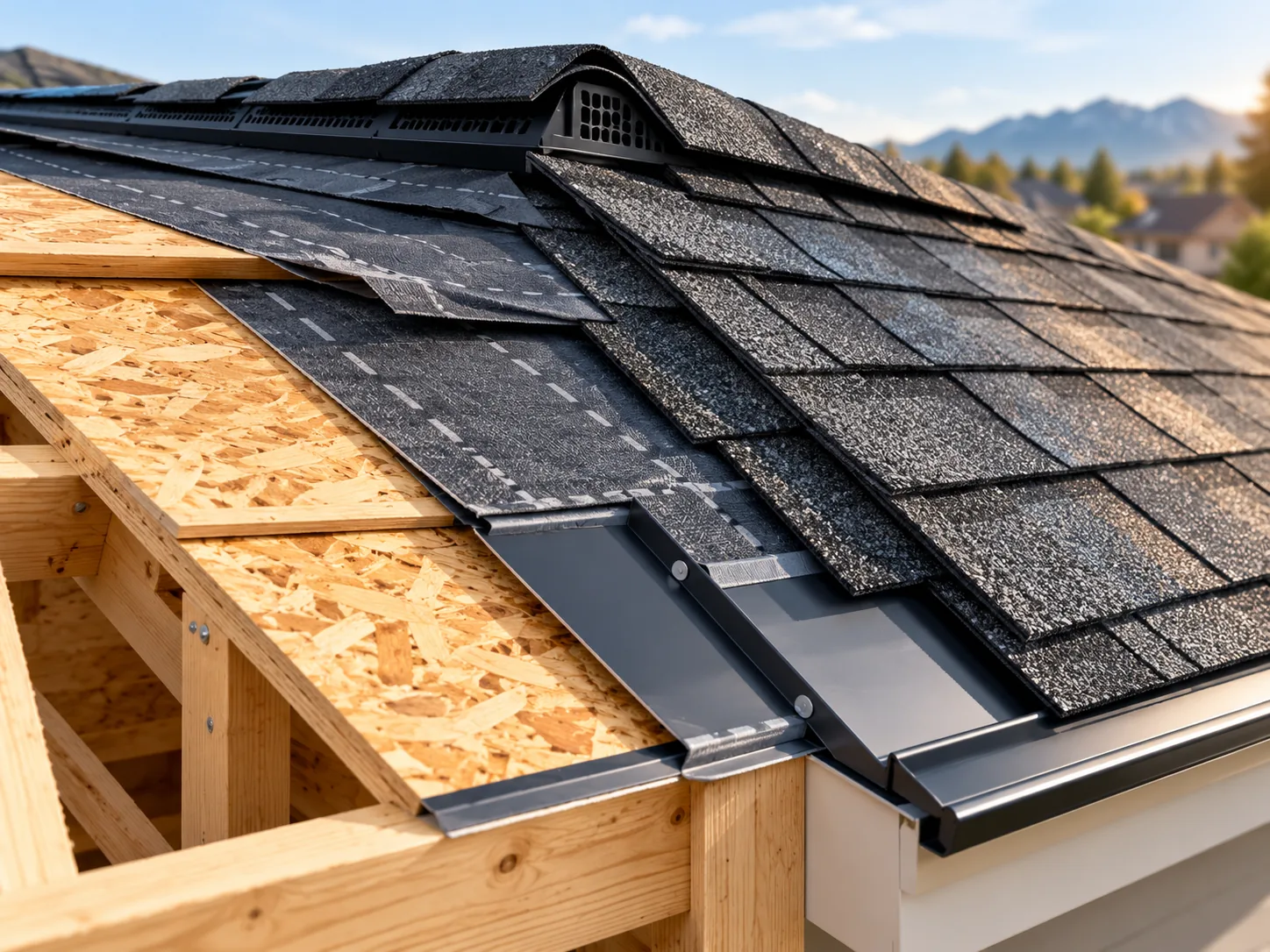
Underlayment, flashing, ventilation, and the roof deck all play a role in keeping the weather outside. A durable repair respects the system around the visible damage.
Explore roofing systemsTell us what you’re seeing and we’ll help you understand a sensible path forward, from a small fix to a full roof project.